



Types of Propylene Glycol: Understanding Grades and Applications
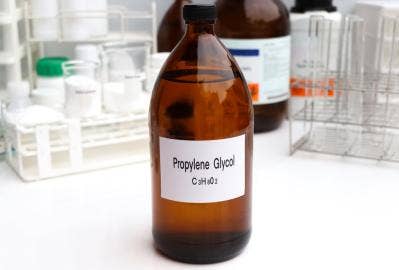
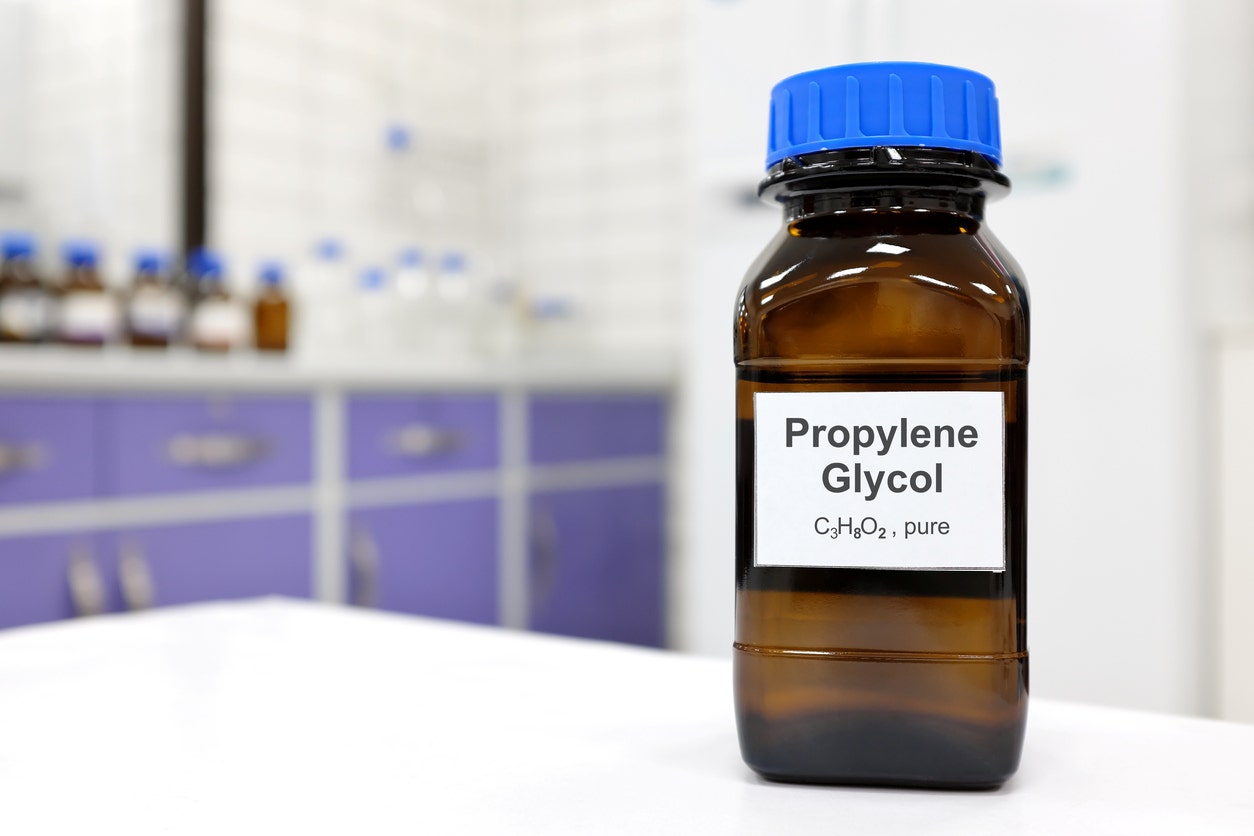
Propylene glycol (1,2-propanediol, monopropylene glycol, MPG) is a synthetic organic compound with chemical formula C3H8O2, molecular weight 76.09 g/mol, and CAS number 57-55-6. This colorless, odorless, tasteless, viscous liquid serves diverse roles across pharmaceutical manufacturing, food production, cosmetic formulation, and industrial processes.
The compound's hygroscopic properties and favorable safety profile enable its multifunctional applications. However, the propylene glycol in your moisturizer differs significantly from what goes into automotive antifreeze. Purity grades create these critical distinctions.
Grade selection determines both legality and functionality. USP/EP Pharmaceutical Grade (at least 99.5% purity) stands as the sole option appropriate for direct food contact and satisfies stringent GMP requirements for pharmaceutical excipients, cosmetics, and personal care formulations. Industrial and Technical grades (over 95% purity) permit higher impurity thresholds and face restrictions barring them from food, pharmaceutical, or cosmetic contact—their domain includes antifreeze, coolants, hydraulic fluids, paints, and plastics.
Mismatching the grade to the application creates problems. Industrial grade in food production violates FDA regulations. Pharmaceutical grade in coolant systems waste budget on unneeded purity. Knowing these boundaries protects regulatory standing, ensures product integrity, and optimizes spending.
Selection hinges on: application type (pharmaceutical/food/cosmetic versus industrial), regulatory compliance demands, purity specifications, authorized use permissions (FDA approval for food contact), manufacturing standards (GMP versus conventional), functional needs (solvent versus humectant versus antifreeze versus plasticizer), and budget constraints.
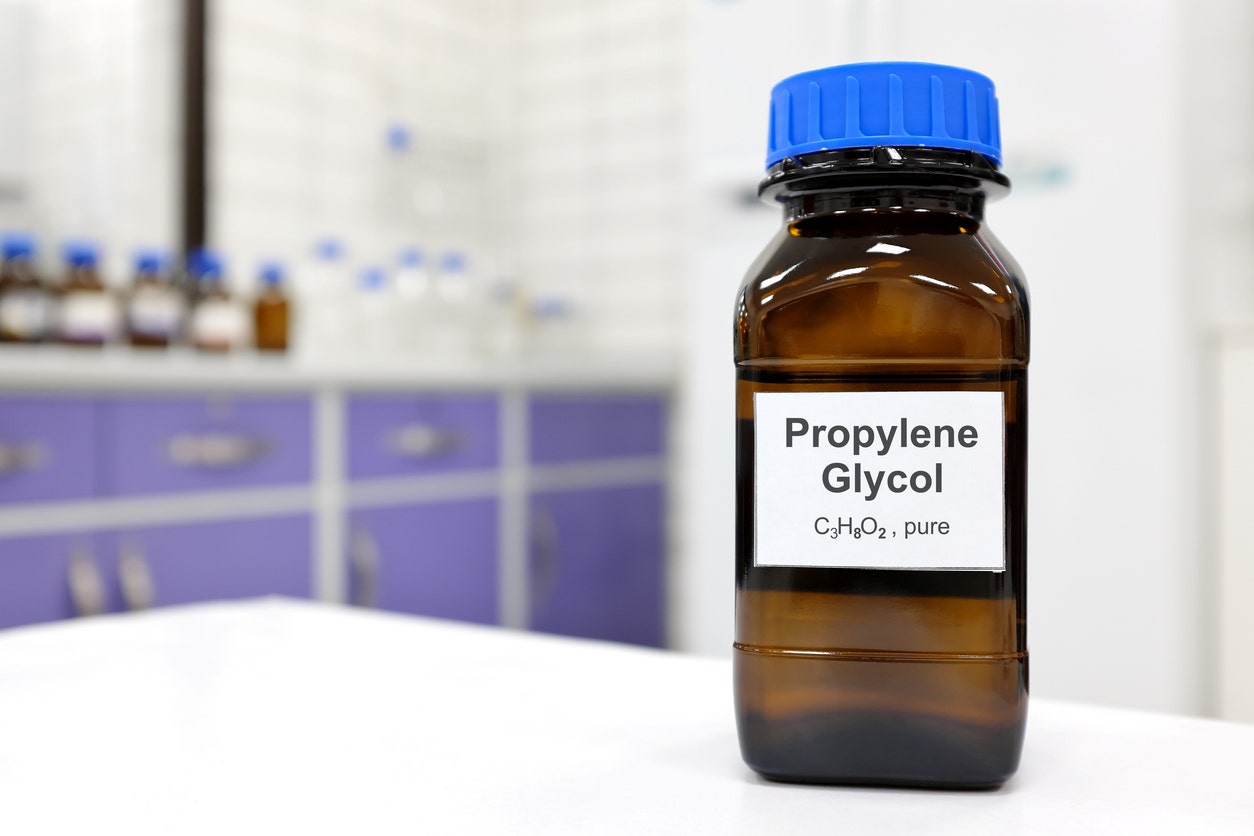
In this article, we’ll explore:
-
Purity Grades & Standards
-
Physical Properties
-
Applications by Grade Type
-
Regulatory Classifications & Compliance
-
How to Choose the Right Type
-
Storage & Quality Control
Purity Grades & Standards
Propylene glycol suppliers stock multiple grades, each targeting distinct regulatory frameworks and quality thresholds.
USP/EP Grade (Pharmaceutical Grade)
USP/EP grade propylene glycol delivers assay purity of at least 99.5%, commonly reaching 99.9 wt%. This represents the pinnacle of commercial purity.
Satisfying United States Pharmacopeia (USP), European Pharmacopeia (EP), and National Formulary (NF) specifications per the USP-NF monograph demands rigorous testing protocols. Production follows Good Manufacturing Practices (GMP) while adhering to International Pharmaceutical Excipients Council (IPEC) guidelines and the Responsible Care program.
Impurity control reaches exacting levels. Chlorides, nitrates, and heavy metals remain limited to parts per million concentrations. FDA authorization under E-number E 1520 permits food contact, making this the singular propylene glycol grade legally acceptable for direct food incorporation.
Pharmaceutical operations rely on it as an excipient — the inactive component enabling drug delivery. Cosmetic manufacturers incorporate it throughout skincare, haircare, and toiletry lines. Food processors deploy it as a flavor carrier, moisture retention agent, and approved additive. Animal feed producers apply it to maintain feedstuff moisture and palatability.
FCC Grade (Food Chemicals Codex)
FCC grade satisfies Food Chemicals Codex specifications — standards specifically addressing food contact substances. Purity mirrors USP grade levels, delivering quality appropriate for food processing environments.
Food manufacturers deploy FCC grade for additives, flavor and fragrance carriers, and food contact scenarios. FCC certification demonstrates focused food safety compliance without the broader pharmaceutical documentation accompanying USP/EP grade.
Food Grade
Food-grade propylene glycol satisfies FDA, USP, and FCC standards while meeting Japanese Pharmacopeia (JP) specifications for Asian market entry. Purity reaches at least 99.5% with complete absence of color, taste, and odor.
European Union authorization arrives through E-number E 1520 designation, though strict 1 g/kg maximum limits apply in human foodstuffs. This concentration ceiling balances consumer protection with functional benefits.
Functions as a carrier for flavors, aromas, colorants, emulsifiers, and antioxidants (1,000 mg/kg maximum in finished food). Serves in food enzymes (500 g/kg maximum) and nutrient carriers (1,000 mg/kg maximum). Moisture retention capabilities preserve freshness and maintain texture.
Industrial Grade
Industrial grade propylene glycol typically delivers purity exceeding 95%, generally spanning 95-99% range. Reduced purity reflects elevated impurity tolerance acceptable for industrial deployment but prohibited in food or pharmaceutical contexts.
Manufacturing requirements relax substantially. GMP compliance doesn't apply. Quality control emphasizes functional performance over trace impurity elimination. Documentation may be sparse or nonexistent.
Antifreeze and coolant production consumes industrial grade as a primary component. It delivers reduced freezing points and elevated boiling points while providing toxicity advantages over ethylene glycol. Aircraft and runway de-icing solutions, hydraulic fluids, brake fluids, and industrial fluid formulations all deploy industrial-grade.
Pricing runs substantially below pharmaceutical grades, creating economic advantages for high-volume applications.
Technical Grade
Technical-grade propylene glycol parallels industrial grade across many characteristics. Purity varies but generally remains below pharmaceutical thresholds, typically spanning 95-99%.
Paint and coating producers deploy technical grade as a solvent and plasticizer. Surface coating operations incorporate it for similar advantages. Plastics and resin manufacturers employ technical grade producing unsaturated polyester resins for fiberglass and plastic materials. Industrial solvent applications also utilize technical grade.
Corrosion Inhibited Grade
Corrosion inhibited grade begins with industrial-grade propylene glycol and incorporates corrosion inhibitors protecting metal surfaces in cooling systems. These additives prevent oxidation and degradation of pipes, radiators, and heat exchangers.
Antifreeze formulations commonly deploy corrosion-inhibited grade to extend system longevity. Industrial cooling systems and heat transfer systems gain protection against corrosion damage.
Physical Properties
General Properties
Propylene glycol presents as a colorless, clear liquid with no odor or, at most faint odor. Pharmaceutical and food grades remain completely tasteless. Viscous liquid consistency at room temperature distinguishes it from thinner solvents.
Hygroscopic behavior means propylene glycol attracts and holds atmospheric moisture. This creates value as a cosmetic humectant and food moisture retention agent, but demands careful storage, preventing water absorption that dilutes the material.
Typical assay for USP grade reaches 99.9 wt% with minimal residue on ignition.
Solubility
Propylene glycol mixes with water across all proportions. This property suits aqueous pharmaceutical, cosmetic, and food formulations ideally. Beyond water, propylene glycol mixes with numerous organic solvents, including acetone and chloroform.
Stability
Propylene glycol maintains stability under standard storage and handling conditions. It resists degradation at normal temperatures and doesn't react with most contacting materials. Compatibility with HDPE (high-density polyethylene), glass, stainless steel, and aluminum simplifies storage.
Applications by Grade Type
Pharmaceutical Applications (USP/EP Grade)
Pharmaceutical operations depend on propylene glycol as an excipient — the inactive component enabling active drug delivery. It functions as solvent for active pharmaceutical ingredients, extractant for drug compounds, and dispersant ensuring uniform medicine ingredient distribution throughout formulations.
Oral and topical medications incorporate propylene glycol as a carrier. Medical device manufacturing and biological sample preservation represent additional pharmaceutical roles.
Food & Beverage Industry (FCC/Food Grade - USP/EP)
Food additive designation E 1520 authorizes propylene glycol deployment throughout food manufacturing. It excels in carrying flavors and aromas, enabling concentrated flavor uniform dispersion. Colorants, emulsifiers, and antioxidants similarly employ propylene glycol as a carrier at 1,000 mg/kg maximum in finished food.
Moisture retention characteristics maintain feedstuff moisture, freshness, and chewiness. As a solvent for food-grade deployments and a stabilizer in food formulations, it sustains product consistency throughout shelf life.
Cosmetics & Personal Care (USP/EP Grade)
Skincare products incorporate propylene glycol as a humectant and moisturizer, drawing moisture into the skin and preventing water loss. As a solvent in cosmetic formulations, it dissolves ingredients that wouldn't otherwise mix. Enhances texture and product stability, preventing separation or crystallization during storage.
Haircare products, creams, lotions, sprays, deodorants, and toiletries commonly contain propylene glycol.
Animal Feed (USP/EP Grade)
Animal feed manufacturers deploy propylene glycol as an authorized feed material. It attracts water, maintaining feedstuff moisture and freshness. Enhanced digestibility for animals results from moisture content and uniform texture. Improved palatability encourages animals to consume full rations.
Notably, propylene glycol doesn't require labeling in animal feed applications despite its presence.
Industrial & Manufacturing Applications (Industrial/Technical Grade)
Antifreeze and coolant manufacturing represent the dominant industrial deployment. Propylene glycol delivers reduced freezing points and elevated boiling points, protecting cooling systems across temperature extremes. Lower toxicity versus ethylene glycol creates safety advantages.
Aircraft and runway de-icing solutions deploy propylene glycol, preventing ice formation. Hydraulic fluids and brake fluids incorporate it for temperature stability. Paint and coating manufacturers deploy it as a solvent and plasticizer. Plastics and resin production consume substantial quantities of manufacturing unsaturated polyester resins.
Regulatory Classifications & Compliance
FDA Approval
FDA approves propylene glycol as a food additive under E-number E 1520 with Generally Recognized As Safe (GRAS) status for specified deployments. Strict 1 g/kg maximum limits in human foodstuffs protect consumers while permitting functional benefits.
Only USP/EP and food grades carry FDA approval for food contact.
EU Classification
E 1520 designation authorizes propylene glycol deployment in foods throughout the European Union. Maximum permitted levels vary by specific application.
Pharmacopeial Compliance
USP (United States Pharmacopoeia), EP (European Pharmacopoeia), NF (National Formulary merged with USP as USP-NF), and JP (Japanese Pharmacopoeia) define pharmaceutical-grade requirements for different markets.
Environmental & Safety Classification
Propylene glycol avoids classification as hazardous under Regulation (EC) No 1272/2008 (CLP Regulation) Annex VI. A low toxicity profile emerges from extensive animal studies demonstrating no carcinogenic effects. Not a skin allergen in healthy individuals, though rare contact dermatitis cases have occurred in certain individuals with compromised skin barriers.
Certifications & Standards
Kosher Certification: Available for products requiring kosher compliance, suitable for Jewish dietary requirements.
Halal Certification: Available for products requiring halal compliance, suitable for Muslim dietary requirements.
GMP Certification: Pharmaceutical-grade propylene glycol undergoes manufacturing under Good Manufacturing Practices.
Quality Assurance Programs: Independent auditor assessments regularly evaluate manufacturing partners against agreed criteria.
Material Compatibility & Handling
Compatible Storage Materials
High-Density Polyethylene (HDPE), polypropylene, glass containers, stainless steel, and aluminum all provide reliable propylene glycol storage.
Safety Considerations
Handle propylene glycol in well-ventilated areas, as it has a low vapor pressure, limiting inhalation exposure. Keep away from heat, sparks, and open flames. Deploy appropriate personal protective equipment, including chemical-resistant gloves and safety goggles.
First Aid Procedures
Eyes: Rinse cautiously with water for several minutes, remove contact lenses if present and feasible, continue rinsing. Seek medical advice if irritation persists.
Skin: Wash with soap and water. Seek medical advice if irritation occurs.
Inhalation: Move to fresh air.
Ingestion: Rinse mouth and seek medical attention if symptoms occur.
Transport Classification
Propylene glycol avoids regulation as a hazardous material for transport under typical consumer-industrial deployment. Standard shipping methods function without special hazmat requirements.
How to Choose the Right Type
For pharmaceutical and medical applications: Deploy USP/EP/Pharmaceutical Grade exclusively. Regulatory compliance remains critical and non-negotiable.
For food and beverage products: Deploy FCC/Food Grade (USP/EP) exclusively. This represents the sole appropriate grade for direct food deployment.
For cosmetics and personal care: Deploy USP/EP Grade satisfying safety standards and purity requirements for skin contact applications.
For animal feed: Deploy USP/EP Grade satisfying quality and safety standards for animal consumption.
For antifreeze and coolants: Deploy Industrial Grade or Corrosion Inhibited Grade for cost-effective antifreeze performance.
For industrial manufacturing (paints, coatings, plastics): Deploy Technical Grade where the highest purity isn't required.
Key Differences: USP/EP vs. Industrial Grade
Purity Level: USP/EP Grade achieves at least 99.5% purity, typically 99.9 wt%. Industrial Grade exceeds 95% but permits higher acceptable impurity levels.
Manufacturing Standards: USP/EP Grade follows GMP compliance with strict quality control. Industrial Grade follows standard manufacturing processes with reduced regulatory requirements.
Applications: USP/EP Grade serves food, pharmaceuticals, cosmetics, personal care, and animal feed. Industrial Grade handles antifreeze, coolants, industrial fluids, paints, and plastics.
Regulatory Compliance: USP/EP Grade complies with FDA, USP, EP, and FCC standards. Industrial Grade maintains minimal regulatory requirements.
Cost: USP/EP Grade costs more due to stringent standards. Industrial Grade offers reduced cost for bulk applications.
Key Takeaways
Propylene glycol exists in multiple purity grades serving distinct applications. USP/EP Pharmaceutical Grade (at least 99.5% purity, typically 99.9 wt%) stands as the exclusive grade appropriate for pharmaceutical excipients, food additives, cosmetics, personal care products, and animal feed. Manufacturing under GMP with comprehensive testing ensures regulatory compliance and consumer safety.
FCC/Food Grade satisfies Food Chemicals Codex specifications for food contact applications. Industrial Grade (over 95% purity) and Technical Grade serve non-food, non-pharmaceutical applications, including antifreeze, coolants, paints, plastics, and industrial fluids at substantially reduced cost. Corrosion Inhibited Grade incorporates protective additives for cooling system applications.
FDA approves only pharmaceutical and food grades for food contact under E-number E 1520 with GRAS status. Maximum limits of 1 g/kg in human foodstuffs apply. Industrial and technical grades lack food authorization regardless of purity claims.
Selection depends on regulatory requirements (pharmaceutical/food versus industrial), application type (human/animal contact versus industrial process), and cost targets. Never substitute industrial or technical grades in pharmaceutical, food, cosmetic, or animal feed applications.
Storage requires compatible containers with tight closures, preventing moisture absorption. USP/EP grade demands Certificates of Analysis documenting purity and impurity testing. Partner with qualified suppliers maintaining GMP manufacturing for pharmaceutical applications or standard industrial processes for non-regulated deployments.
For more detailed guidance, explore our Resource Library.
Our Customer Care team is also available for more information and documentation, including chemical Safety Data Sheets.
Find Propylene Glycol You Can Trust
If you are looking for high-quality propylene glycol for your lab, product line, or research facility, be sure to visit our store to explore our trusted selection and request a quote.
As your trusted partner in chemical supply, Lab Alley is always striving to meet the growing demands of our customers. We want you to be able to access all of your chemical needs in one place, along with streamlined online ordering and fast shipping.
Due to popular demand from our valued clientele, Lab Alley's propylene glycol is available in a range of purities and packaging options to suit various commercial, laboratory, and personal needs.